- Sandy Cheng 🇨🇳
- Posts
- One Movie, Twenty Years of Change in China
One Movie, Twenty Years of Change in China

Sandy Cheng
January 14, 2026
Jia Zhangke(贾樟柯)is a director I probably don’t need to introduce to many of you. When I asked on Instagram last year about your favorite Chinese-language movies, one of the films that came up again and again was his 2015 movie Mountains May Depart《山河故人》.
But to those who might not know him, he is one of China’s most prolific contemporary directors. He is amongst China’s so-called Sixth Generation of filmmakers, a group that emerged in the 1990s and focused on contemporary China, ordinary people, and rapid social change, often working outside the state studio system.
Most of his films are critically acclaimed, but some viewers find them challenging to sit through because of their slow pacing, long takes, and quiet, observational style.
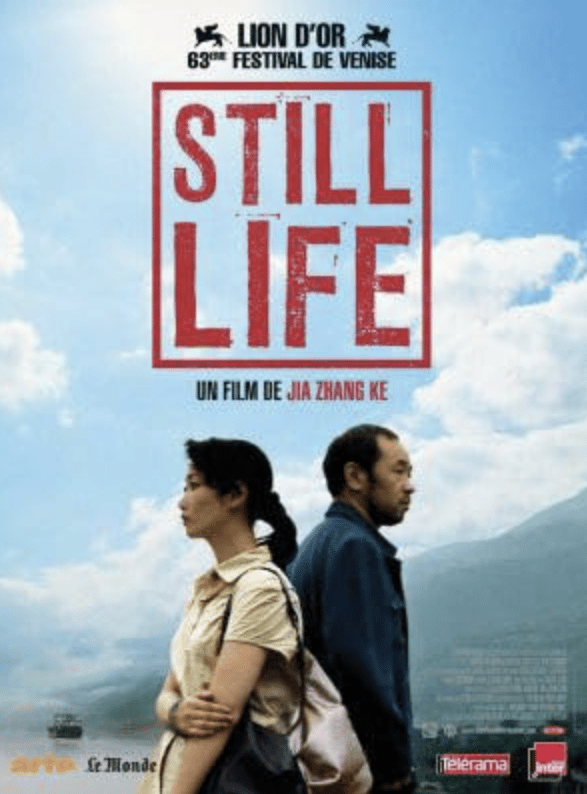
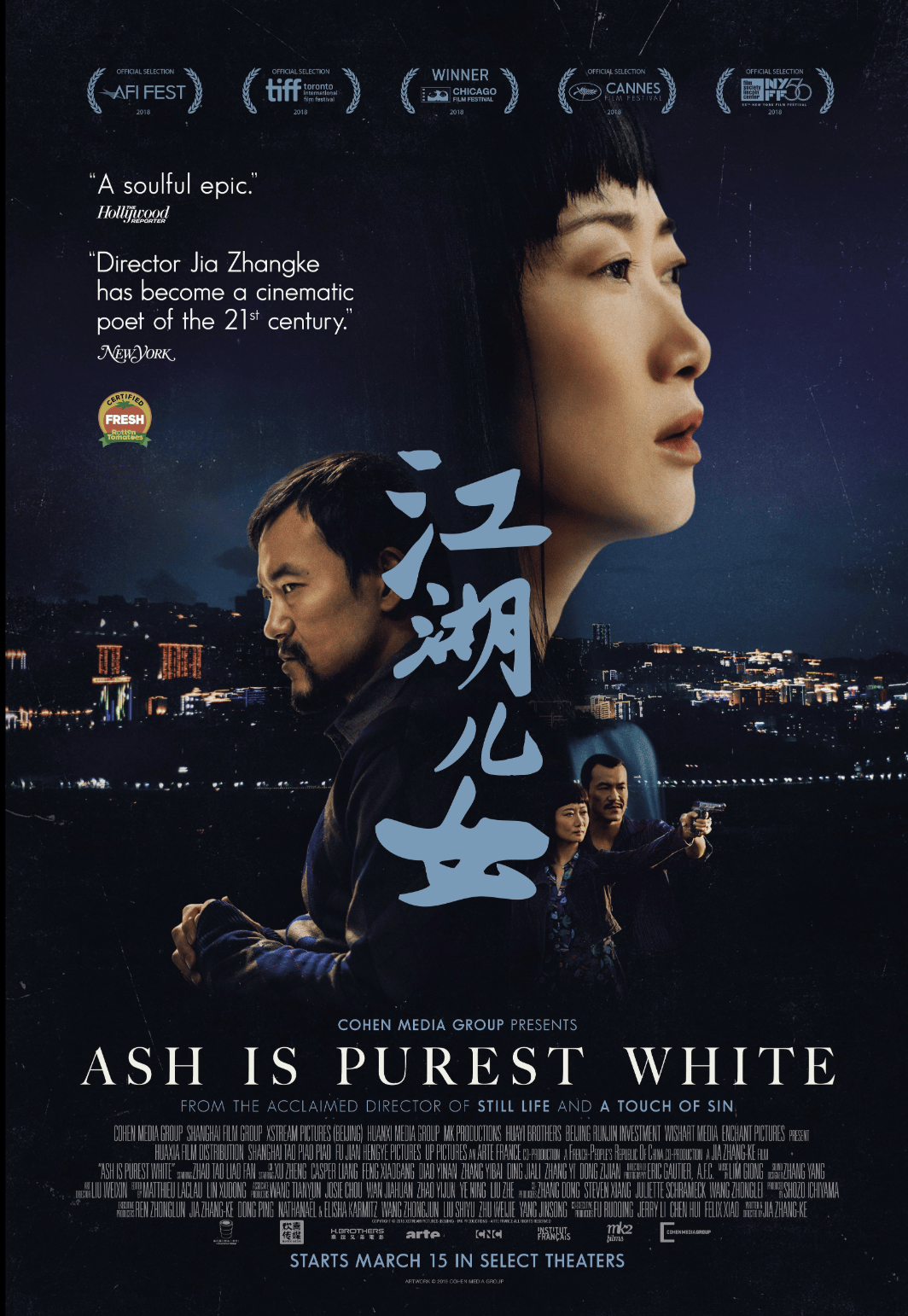
If you haven’t seen any of his films yet, Mountains May Depart is a great place to start. I’d also recommend A Touch of Sin《天注定》, Ash Is Purest White《江湖儿女》, and Still Life《三峡好人》as some of his more accessible works. Let me know if you plan to watch any of them, and would like to get some Quizlet vocabulary cards for them!
 |  |  |
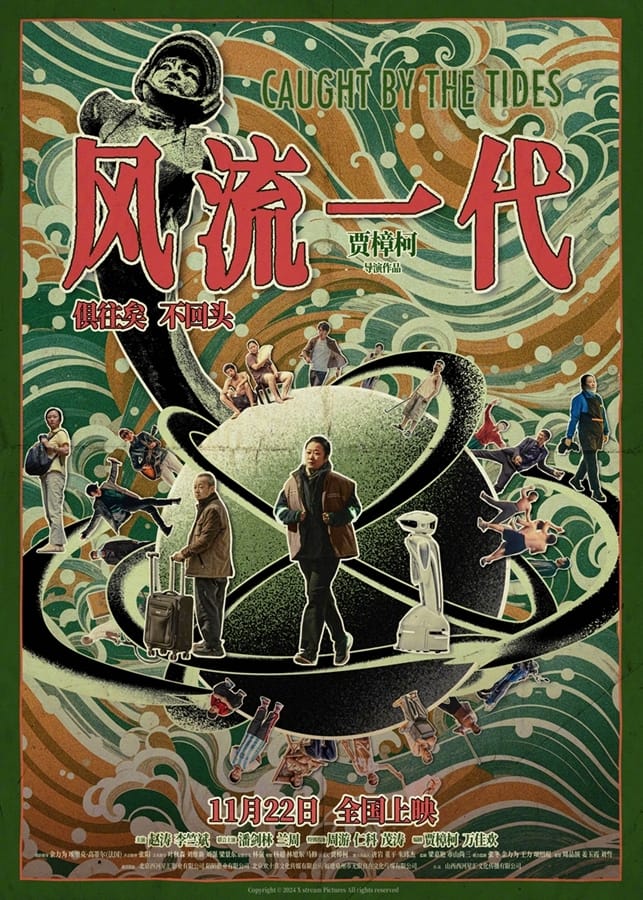
His latest film, Caught by the Tides《风流一代》, came out about a year ago and traces China’s transformation over the past two decades, using a couple’s relationship as its emotional backbone. The film moves through different regions of China, from rural towns to rapidly changing big cities (the film was shot in Datong, Fengjie and Zhuhai), while touching on major moments that reshaped society, from the building of the Three Gorges Dam to the 2008 Beijing Olympics and the Covid-19 pandemic. The film is built from a mix of footage shot over many years, including material from Jia Zhangke’s earlier films, previously unreleased footage, and entirely new scenes created for this project.
Caught by the Tides can sometimes feel closer to a documentary, and the story element isn’t very strong, especially in the first half of the film. We watch seemingly unrelated episodes from different people’s lives, observing how ordinary Chinese people lived twenty years ago. I suspect some of you might give up during this first half, as there is barely any dialogue. Instead, we learn about China mostly through songs, signs, and radio announcements.
Somewhere around the halfway point, the film’s two protagonists begin to get more screen time, and one of them actually starts talking quite a bit. Only then do we clearly see what the film’s story is really about. This movie requires patience. Don’t go into it expecting something eventful or exciting, with lots of twists and turns.
Jia Zhangke doesn’t hold your hand. You’re left alone to observe these fragments of life across different decades, either simply watching and enjoying the beautiful cinematography, or trying to piece together what the director might be getting at with certain moments. The film doesn’t celebrate or promote China’s transformation. It simply shows what’s happening and lets you figure things out on your own.
Toward the end, the film briefly made me worry that it might conclude in an unsatisfying way, at least for me. But in the end, it wraps up in a very beautiful and emotional manner that actually elevates the entire experience. I think those of you who decide to stick with it will ultimately find it rewarding, and you may also come away with a deeper understanding of how ordinary Chinese people have lived their lives.
If you decide to give it a watch, I also put together some Quizlet vocabulary cards based on some of the more interesting and important words and phrases you can hear or see in the film. Even though there isn’t much dialogue, there are still quite a few useful vocabulary items I collected for you. So if you enjoy learning Chinese through movies, you can head over to my Quizlet page and review or learn these words before watching the film.
Reply